
Invited Speakers 2026
Invited Speaker Ⅰ

Ze Zhou
Wuhan University of Technology, China
Brief Introduction: Dr. Ze Zhou is currently a Lecturer and Master's supervisor at the School of New Energy and Electrical Engineering, Wuhan University of Technology. He received his Ph.D. degree in Control Science and Engineering from Zhejiang University in 2023. His research interests span model predictive control, intelligent and mathematical optimization algorithms, machine learning, transportation-energy integrated system optimization, electricity-hydrogen integrated energy systems, energy management of new energy vehicles, and power electronic conversion and control for renewable energy. To date he has published 21 SCI-indexed papers as first or corresponding author in leading journals including Applied Energy, Energy, Energy Conversion and Management, IEEE Transactions on Power Electronics, IEEE Transactions on Transportation Electrification, and Science China Information Sciences, of which 10 appear in CAS Tier-1 journals, and holds 11 granted or filed invention patents. He has led nine research projects, including sub-tasks of the National Science and Technology Major Project on Smart Grid and of the National Key R&D Program, a Hubei Provincial Natural Science Foundation Youth (Category B) project, and a Wuhan Chenguang Program project. His work has been recognized with the First Prize of the Hubei Provincial Science and Technology Progress Award and the Second Prize of the Chinese Association of Automation Science and Technology Progress Award. He serves as a reviewer for IEEE Transactions on Industrial Electronics, IEEE Transactions on Power Electronics, Applied Energy, and other leading international journals.
Speech Title: Distribution Robust Optimization of Electro-hydro Coupling System
Abstract: TBD
Invited Speaker Ⅱ

Yanling Zheng
Zhejiang University of Science and Technology, China
Brief Introduction: Yanling Zheng is a Lecturer, and Master’s Supervisor at Zhejiang University of Science and Technology. She received her Ph.D. degree from Southeast University in December 2023. Her research interests include distributed optimization and control, multi-agent systems, privacy-preserving, and related areas. She has published more than ten papers in leading journals, including IEEE Transactions on Automatic Control, IEEE Transactions on Neural Networks and Learning Systems, and SCIENCE CHINA Information Sciences. Two of her papers have been recognized as ESI Hot Papers, and two as ESI Highly Cited Papers. She currently leads a Young Scientists Fund project supported by the Natural Science Foundation of Zhejiang Province, and serves as a reviewer for several international journals, including IEEE Transactions on Automatic Control.
Speech Title: TBD
Abstract: TBD
Invited Speaker Ⅲ
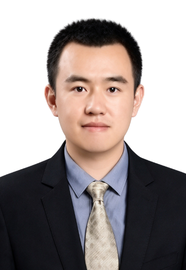
Yu Lu
Nanjing University of Science and Technology, China
Brief Introduction: Yu Lu received his B.E. degree in automation from Nanjing University of Science and Technology, Nanjing, China in 2015, and the Ph.D. degree in control science and engineering from Shanghai Jiao Tong University, Shanghai, China in 2020. From 2020 to 2021, he was a research fellow with the School of Electrical and Electronic Engineering, Nanyang Technological University, Singapore. He is currently an associate professor with the School of Energy and Power Engineering, Nanjing University of Science and Technology, Nanjing, China. His research interests include unmanned systems, task planning and formation control. He has published 44 academic papers with over 1400 citations and holds 19 granted Chinese national invention patents. He currently serves as an early-career editorial board member of the Journal of Nanjing University of Science and Technology, a member of the Unmanned Aerial Vehicle Autonomous Control Special Committee and the Adaptive Dynamic Programming and Reinforcement Learning Special Committee of the Chinese Association of Automation. Besides, he has chaired technical sessions at the international conferences ICCA 2022 and CCAI 2026, and worked as a reviewer for more than 30 SCI journals.
Speech Title: Multi-Stage Interception Trajectory Planning for Medium- and Long-Range Maneuvering Targets
Abstract: With the increasing maneuverability and penetration capability of targets, maritime defense missions are gradually extending toward medium- and long-range interception. To address the problems of insufficient midcourse safety, weak dynamic adaptability, and limited terminal accuracy of autonomous surface vehicles in complex environments, this report proposes a multi-stage interception trajectory planning method for medium- and long-range maneuvering targets. The proposed method divides the trajectory generation process into a waypoint-passing phase and a receding horizon interception phase. In the waypoint-passing phase, a double-level trajectory smoothing mechanism is introduced to ensure trajectory smoothness and smooth control transition. In the terminal phase, a receding horizon control framework with a Warm-Start strategy is adopted to improve optimization efficiency and real-time interception performance. Simulation results show that, the proposed method delivers better overall performance in interception time and energy consumption, with strong dynamic response and adaptability to maneuvering targets. It verifies the efficacy of multi-phase pseudospectral waypoint planning and warm-start rolling optimization, showing promising application potential for medium- and long-range interception.
Invited Speaker Ⅳ
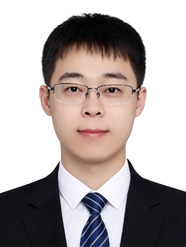
Jinxi Zhang
Northeastern University, China
Brief Introduction: Jin-Xi Zhang (Senior Member, IEEE) received the B.S. degree in automation and the Ph.D. degree in control theory and control engineering from the Northeastern University, China, in 2014 and 2020, respectively. From 2019 to 2020, he was a Research Fellow with the University of Johannesburg, South Africa. He is currently a Professor with the State Key Laboratory of Synthetical Automation for Process Industries, Northeastern University. His research interests include prescribed performance control, fault diagnosis and fault-tolerant control for complex nonlinear systems. He is also an Associate Editor for IEEE Transactions on Cybernetics.
Speech Title: Fault-Tolerant Control of Underactuated Surface Vehicles
Abstract: This talk focuses on fault tolerant trajectory tracking control for the underactuated surface vehicles (USVs) subject to sensor and actuator faults. The conventional fault tolerant control (FTC) methods are valid for minor sensor faults. By contrast, this presentation introduces constraint explicitization and variable dimension reduction techniques based on unit sum of squares functions, and derives controllability criteria as well as guarantee mechanisms for the USV under the severe sensor faults. Further, for the restriction to constant actuator faults in the traditional FTC methods, a power law control gain tuning scheme based on barrier functions is presented, which yields a compensation technique for the time varying actuator faults of the USVs.
Invited Speaker Ⅴ

Bing Huang
Northwestern Polytechnical University, China
Brief Introduction: Bing Huang is a professor of Northwestern Polytechnical University. His research interests include formation maneuver of unmanned marine vehicles and formation control of UAVs. He has published many research papers as the first author or corresponding author in IEEE-CAA JAS, TAC, TCST, TASE, TII,TAES,TVT, TNNLs, TTE, TNSE, TGCN, TITS, IOTJ, which include 9 ESI hot papers and 16 ESI highly cited papers. He is also an associate editor of《Drones》. He is one of the TOP 2% scientists. He has supported by the General Program of the National Natural Science Foundation of China.
Speech Title: TBD
Abstract: TBD
Invited Speaker Ⅵ

Jian Li
Dalian Maritime University, China
Brief Introduction: Jian Li is an Associate Professor and master’s supervisor at Dalian Maritime University and is recognized as a high-level talent by the city of Dalian. His research focuses on nonlinear control theory and intelligent control of marine engineering systems. He has led multiple national and provincial/ministerial-level research projects, including General Program and Young Scientists Fund projects funded by the National Natural Science Foundation of China, projects supported by the China Postdoctoral Science Foundation, and open research projects funded by key laboratories in the transportation sector.
He has received the Liaoning Provincial Outstanding Doctoral Dissertation Award and the Second Prize of the Liaoning Provincial Natural Science Academic Achievement Award, as well as priority publication funding for outstanding natural science monographs from Liaoning Province. He has published more than 30 SCI/EI-indexed papers in leading journals. He has also filed or been granted more than 10 Chinese invention patents.
Speech Title: Indirect Adaptive Neural Network Control of Shipborne stabilization platforms with Prescribed Performance
Abstract: Shipborne stabilization platforms play an important role in compensating for ship motions and ensuring the stable operation of marine equipment. This presentation introduces indirect adaptive neural network control with prescribed performance for shipborne stabilization platforms, addressing model uncertainties, ship-motion disturbances, and control performance requirements. First, indirect adaptive methods are combined with neural networks to estimate and compensate for uncertain platform dynamics and ship-motion disturbances online, without requiring acceleration signals from either the platform or the ship. Second, prescribed performance is incorporated into the control design to improve transient and steady-state performance. Specifically, asymmetric performance bounds are constructed according to the sign of the initial tracking error, performance functions with prescribed-time convergence are developed, and a mechanism for flexibly relaxing performance constraints is introduced. These developments aim to reduce overshoot, explicitly specify settling-time requirements, and prevent control singularities arising from constraint violations under adverse conditions. The presented methods provide a basis for improving motion compensation performance and facilitating the practical application of shipborne stabilization platforms.
Invited Speaker Ⅶ
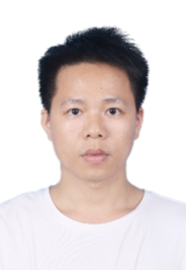
Shude He
Guangzhou University, China
Brief Introduction: Shude He received the B.E. degree in automatic control from Guangdong University of Technology, Guangzhou, China, in 2015, and the Ph.D. degree in control science and engineering from South China University of Technology, Guangzhou, in 2021. He carried out post-doctoral research at the School of Mechanical and Electrical Engineering, Guangzhou University, from 2021 to 2023, where he is currently an Associate Professor. His current research interests include coordinated control, cooperative learning, and autonomous vehicles. He serves as Young Editorial Board Member of Chinese Journal of Ship Research and Journal of Guangzhou University (Natural Science Edition). He received the Second Prize of the 2024 Guangdong Provincial Natural Science Award (ranked second). He has led one project funded by the National Natural Science Foundation of China, two projects funded by the Natural Science Foundation of Guangdong Province. He has been named to the Stanford/Elsevier Top 2% Scientists list.
Speech Title: Dynamic Learning Control for Swarms of Unmanned Surface Vehicles under External Disturbance
Abstract: Due to the combined effects of time-varying disturbances (such as wind, waves and currents) and modeling uncertainties, cooperative control of a swarm of unmanned surface vehicles places higher demands on stability and tracking performance. This report addresses the dynamic learning control problem for a swarm of unmanned surface vehicles subject to external disturbances and proposes an integrated control framework of "online learning-knowledge storage-experience reuse." First, disturbance observers are incorporated to compensate for the external time-varying disturbances, and an adaptive neural network formation controller is designed by combining prescribed performance control with adaptive backstepping, which guarantees that the tracking errors always remain within the prescribed bounds and that all closed-loop signals are uniformly ultimately bounded. Then, a cooperative learning weight update law containing a consensus term is designed for the adaptive neural network, such that the neural network weights converge along the union of the state trajectories of all surface robots, enabling accurate identification of the uncertain dynamics (knowledge acquisition) and storage of the acquired knowledge. Finally, an experience-based controller is constructed using the stored constant weights (knowledge reuse), which realizes cross-task reuse of the learned knowledge, reduces the computational burden, and improves transient performance.
Invited Speaker Ⅷ

Ke Lu
Guangxi University, China
Brief Introduction: Ke Lu received the Ph.D. degree in control science and engineering from the South China University of Technology, Guangzhou, China, in 2024. He was a Visiting Student with the Department of Mechanical Engineering, National University of Singapore, Singapore, from November 2022 to November 2023. He is currently an Assistant Professor with the School of Mechanical Engineering, Guangxi University. His current research interests include adaptive control, distributed cooperative systems, and learning-based control.
Speech Title: Safe Cooperative Control and Learning for Multiple Unmanned Surface Vehicles
Abstract: TBD