
Keynote Speaker 2026
Keynote Speaker I
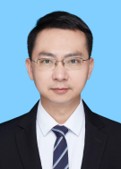 Min Liu
Hunan University, China
Brief Introduction: Liu Min, a secondary professor at Hunan University and Party Committee Secretary of the School of Artificial Intelligence and Robotics, is a recipient of the National Outstanding Youth Science Fund, a member of the Academic Degree Appraisal Panel of the State Council, a Youth Changjiang Scholar of the Ministry of Education, and the lead scientist of the National Key R&D Program. He holds a bachelor's degree from Peking University and a Ph.D. from the University of California, Riverside. He serves as Director of the Key Laboratory of Advanced Manufacturing Vision Inspection and Control Technology in the Machinery Industry, and is a council member of the China Image and Graphics Association, Vice Director of its Youth Working Committee, and Secretary-General of its Organizational Development Committee.
Speech Title: Technology and Application of Embodied Intelligent Detection for Surface Defects of Complex Industrial Components
Abstract: For high-end manufacturing sectors such as aerospace, energy equipment, and precision electronics, surface quality inspection of complex industrial components is essential to ensuring product performance and manufacturing competitiveness. The development of intelligent technologies for rapid and precise surface defect detection represents a critical challenge in high-end manufacturing quality control, holding significant strategic importance for enhancing China's core competitiveness in advanced manufacturing. In practical manufacturing environments, highly complex structural morphologies, heterogeneous surface optical responses, and cross-scale evolution of defect characteristics pose substantial challenges. Traditional manual inspection and fixed-configuration machine vision systems struggle to meet the demands for high-efficiency, high-consistency quality control, severely constraining the intelligent advancement of high-end manufacturing. Our team focuses on the common challenges in complex surface defect detection, conducting research on key technologies including robotic active perception and imaging, precise and efficient defect detection, and trustworthy quality evaluation, while integrating these into a series of robotic industrial defect detection systems. These achievements have been applied to quality inspection of high-end equipment such as aero-engine blades, photovoltaic modules, and precision electronic products, supporting technological transformation and industrial upgrading, and advancing China's advanced manufacturing sector toward the mid-to-high end of the global value chain.
Keynote Speaker II
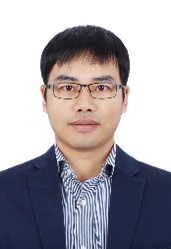 Xiang Yu
Beihang University, China
Brief Introduction: Xiang Yu is a Distinguished Professor at Beihang University and a recipient of the National Science Fund for Distinguished Young Scholars and the Youth Program of the National Overseas High-Level Talent Plan. His research focuses on safety control and bio-inspired intelligence for unmanned aerial vehicles. He has published more than 100 papers in Nature npj Robotics, the International Journal of Robotics Research (IJRR), and IEEE/AIAA/IFAC Transactions, authored one monograph, and holds more than 60 authorized national invention patents. He has received the Gold Award at the Global Artificial Intelligence Product Application Expo, the First Prize of the Science and Technology Progress Award of the China Instrument and Control Society, and Gold Medals at the Geneva and Nuremberg International Invention Exhibitions. He currently serves as a member of the expert group for a major national special project, a member of an expert group in a certain field, an editorial board member of three IEEE Transactions, and a member of the IEEE Technical Committee on Aerial Robotics and Unmanned Aerial Vehicles.
Speech Title: Key Technologies and System Development for Bio-inspired Intelligent Autonomous Piloting of Unmanned Aerial Vehicles
Abstract: Currently, unmanned flight vehicles are largely confined to “ideal environments, deterministic missions, and preset modes,” and their autonomy, safety, and intelligence urgently need to be improved in strong-interference and adversarial environments. Addressing challenges such as the learning of composite risk factors, the autonomous navigation and positioning under strong denial and adversarial conditions, the precise control under moving bases and variable centers of mass, and the safe flight under multi-source risk factors, this presentation produces, from the perspective of bio-inspired intelligence, the team’s recent research progress in risk learning and prediction algorithms, bio-inspired intelligent navigation, bio-inspired dexterous manipulation, and safety control, as well as system development and applications.
Keynote Speaker III
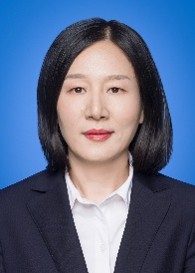 Yanwu Wang
Huazhong University of Science and Technology, China
Brief Introduction: Yan-Wu Wang is a Professor and Doctoral Supervisor at Huazhong University of Science and Technology. Her research interests include analysis and control of hybrid systems, and distributed control and optimization of smart grids. She has presided over key projects of the National Natural Science Foundation of China and the Hubei Provincial Outstanding Youth Science Fund, and has published more than 160 SCI-indexed papers. She currently serves as an editorial board member/associate editor of journals such as IEEE Transactions on Smart Grid, Control and Decision (in Chinese), Journal of the Franklin Institute, and International Journal of Robust and Nonlinear Control. She has received the First Prize for Natural Science of the Ministry of Education and the First Prize for Natural Science of Hubei Province. She has been selected as a New Century Excellent Talent of the Ministry of Education, an Elsevier Highly Cited Chinese Researcher, and one of the World's Top 2% Scientists.
Speech Title: Secondary Control and Optimization of Smart Microgrids
Abstract: A smart microgrid is a small-scale distributed power network composed of distributed power sources, electrical loads, distribution facilities, monitoring and protection devices, etc. It is not only a powerful supplement to large power grids, but also one of the key technologies for achieving energy transition and the carbon peaking and carbon neutrality goals, with typical application value in scenarios such as remote areas, islands, areas without or with weak power supply, and industrial and commercial parks. This report analyzes the multi-source cooperative power supply control in AC and DC microgrids by considering different kinds of cyber attacks. Different modeling methods are proposed for false data injection attacks and denial-of-service attacks. New resilient control strategies are proposed for AC and DC microgrids to achieve different cooperation objectives. The report compares the improvement effects of the described methods in enhancing stability performance and briefly analyzes future development directions.
Keynote Speaker IV
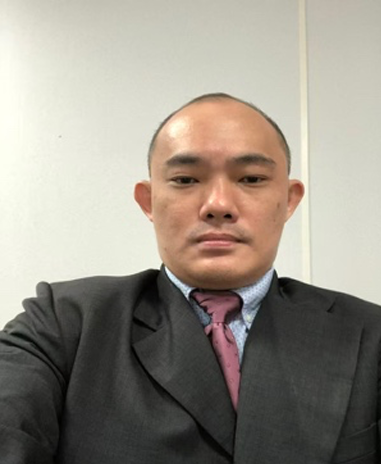 Chee Kiat Seow
University of Glasgow, UK
Brief Introduction: Chee Kiat Seow (Senior Member, IEEE) received the B.Eng. degree in electrical and electronics engineering from Nanyang Technological University, Singapore, in 2000, the M.Sc. degree in electrical and electronics engineering from the National University of Singapore, Singapore, in 2003, and the Ph.D. degree from Nanyang Technological University, in 2009. He is currently an Associate Professor and the Programme Director with the School of Computing Science, University of Glasgow, Glasgow, U.K., in 2023. His research interests mainly comprise resilience intelligence, spanning localization/navigation in GNSS-denied scenarios, active SLAM, GNSS anti-spoofing, and 3D reconstruction, as well as edge intelligence, cyber-physical security, and generative artificial intelligence (AI)/machine learning applications.
Speech Title: TBD
Abstract: TBD
Keynote Speaker V
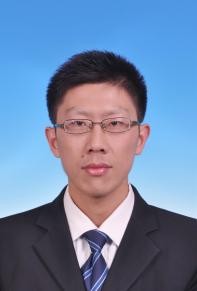 Bingchang Wang
Shandong University, China
Brief Introduction: Bingchang Wang is a Professor at the School of Control Science and Engineering, Shandong University. He received the Ph.D. degree from the Institute of Systems Science, Chinese Academy of Sciences, in 2011. This was followed by postdoctoral research at the University of Alberta and the University of Newcastle (2011–2013) and a research visit to Carleton University in 2014. He has received the Second Prize of the Shandong Provincial Natural Science Award, the Second Prize of the CAA Natural Science Award, and the IEEE Beijing Chapter Young Author Award. He has published over 90 papers, including over 20 papers in IEEE TAC, Automatica,and SIAM J. Control and Optimization. He is an IEEE Senior Member and served as an Associate Editor of IEEE Control Systems Letters. His research interests include stochastic control and distributed computing, mean-field games, and machine learning. He is the recipient of the NSFC Excellent Young Scientists Fund.
Speech Title: Mean Field LQG Games and Control: Model Based/Free Approaches
Abstract: Mean field games have become a hot topic in recent years. The presenter overcame the bottleneck obstacle of existing methods and proposed the method of decoupling forward backward equations (FBSDEs). Breaking away the traditional fixed-point framework, the necessary and sufficient conditions are obtained for the uniform stabilization of decentralized asymptotic optimal strategies and mean field control systems under the most basic assumptions. This talk will review briefly the literature of mean field games and introduces the latest research progress of mean field games and control, including team decision problems and reinforcement learning algorithms.
Keynote Speaker VI
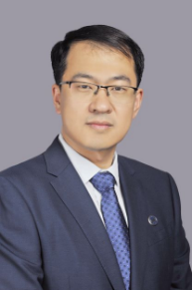 Kai Ma
Yanshan University, China
Brief Introduction: 马锴,燕山大学教授、博士生导师,电气工程学院副院长,智能控制与神经信息处理教育部重点实验室主任。研究方向为智能电网分布式资源协同控制与优化。近年来在国内外信息与能源领域知名期刊发表学术论文150余篇,出版英文专著1部,授权国家发明专利30余件,制定国家标准2项;主持国家自然科学基金优青、区域联合基金重点、国家重点研发计划课题等国家和省部级科研项目10余项;入选2024-2026全球前2%高被引科学家、河北省燕赵青年科学家、杰青和拔尖人才。研究成果获中国自动化学会科技进步一等奖、中国电工技术学会科技进步一等奖、中国发明协会人物奖等。
Speech Title: 港口综合能源系统运行控制与优化
Abstract: 港口综合能源系统集电、气、热等多种能源于一体,具有能源与物流深度耦合、船舶动态接入岸电等主要特征,其稳定经济运行面临重大挑战。报告重点介绍团队针对港口综合能源系统运行控制与优化所开展的系统性研究工作,包括源荷信息的智能感知与传输方法,岸船互联能源系统的协调控制策略,能源与物流协同优化及管控平台等,为建设绿色低碳港口提供理论和技术支撑。
Keynote Speaker VII
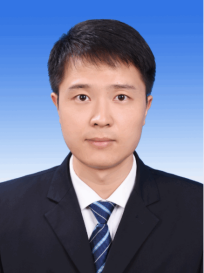 Meng Zhang
Xi'an Jiaotong University, China
Brief Introduction: Meng Zhang received the Ph.D. degree in Control Science and Engineering from Zhejiang University. He is currently a Chief Scientist of the National Key Research and Development Program of China and a Young Changjiang Scholar. His research achievements have been recognized by the First Prize of the CAA Science and Technology Progress Award, the First Prize of the CAA Natural Science Award, the First Prize of the Excellent Scientific and Technological Research Achievement Award of Shaanxi Higher Education Institutions, the Shaanxi Youth Science and Technology Award, the Wu Wenjun Artificial Intelligence Excellent Youth Award, and the Excellent Project Award of the Huawei MindSpore–CAAI Academic Fund. As Principal Investigator.He has led over 30 sponsored projects, including National Key Research and Development Programs of China, Key Programs of the NSFC, and National Defense Science and Technology Innovation Special Zone projects. He serves as Associate Editor of IEEE Transactions on Automation Science and Engineering, IEEE Transactions on Cybernetics, and the Focused Section of IEEE/ASME Transactions on Mechatronics, etc.
Speech Title: Perception–Decision–Control Technology for Autonomous Robots in Complex Dynamic Environments
Abstract: Perception, control, and decision-making are the key enablers for robots to achieve autonomous operation. This report presents the recent progress of our research group in autonomous robotics along three lines: environmental perception and scene understanding, autonomous navigation and control, and autonomous manipulation and control. Specifically, the group's work includes the following. First, semantic scene representations are constructed on the basis of SLAM (simultaneous localization and mapping) and 3D object detection; large language models (LLMs) are exploited to align semantic features extracted from natural-language queries with the spatial structural features of three-dimensional objects, thereby supporting robotic perception and planning. Second, starting from state perception and localization and incorporating kinematic and dynamic models, steering and velocity control commands are computed in real time through feedback control, so as to achieve rapid tracking of reference paths. Third, obstacle velocities are estimated online from real-time environmental perception and state feedback, and reactive motion planning is adopted to realize real-time avoidance of dynamic obstacles.
Keynote Speaker VIII
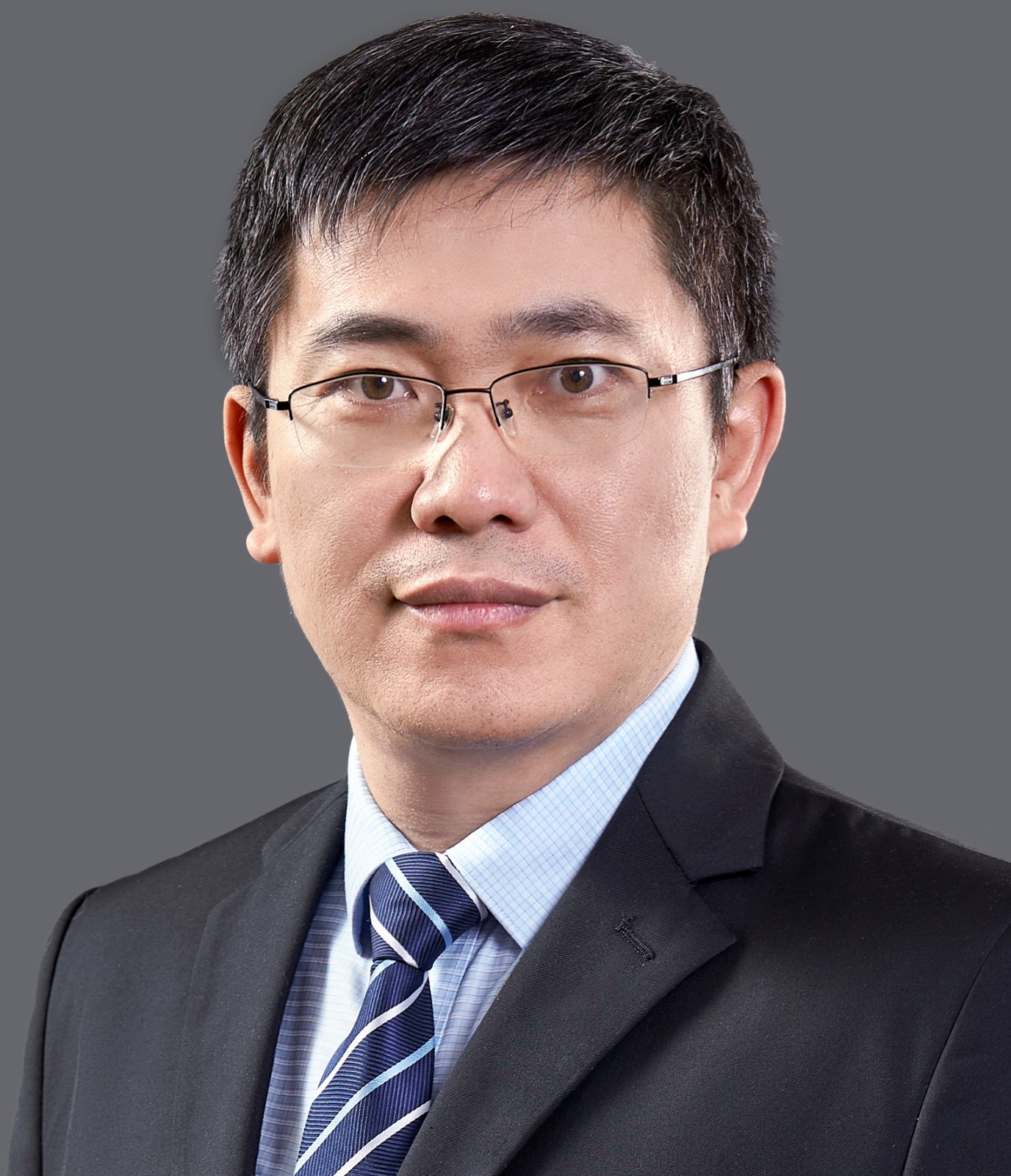 Dong Wang
Dalian University of Technology, China
Brief Introduction: Dong Wang, Professor and Ph.D. Supervisor at the School of Control Science and Engineering, Dalian University of Technology. He is the Changjiang Scholar Distinguished Professor, Chief Scientist of National Key R&D Program of China, Director of the Institute of Intelligent Control, Deputy Chair of the Academic Degree Committee, and Lead of the doctoral programs in Control Science and Engineering and Electronic Information.
Speech Title: TBD
Abstract: TBD
Keynote Speaker IX
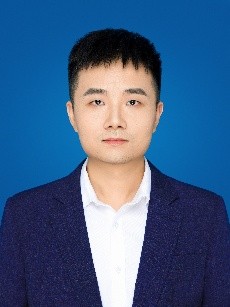 Kai Wang
Central South University, China
Brief Introduction: Kai Wang is a Professor and Doctoral Supervisor at Central South University. His research has long focused on the theoretical methodologies and engineering applications of intelligent industrial automation. He has been selected for the National High-Level Young Talent Program, the 7th Youth Talent Support Program of the China Association for Science and Technology (CAST), and the Changsha Outstanding Innovative Young Talent Training Program. He is also a recipient of the Huxiang Young Talents Program and the Excellent Young Scientists Fund of the Natural Science Foundation of Hunan Province.
He has led projects funded by the sub-projects of National Major Science and Technology Projects, and sub-topics of the National Key Research and Development Program of China. As first or corresponding author, he has published more than 60 papers in prestigious journals, including IEEE Transactions and IFAC-affiliated journals. He has been listed among the World's Top 2% Scientists for multiple consecutive years.His research achievements have been recognized with several awards, including the First Prize of the Science and Technology Award of China Nonferrous Metals Industry Association, the Second Prize of the Natural Science Award of the Chinese Association of Automation (CAA), and the Second Prize of the Natural Science Award of Hunan Province.
Speech Title: Intelligent Technologies for Key Processes in Alumina Production and Their Applications
Abstract: Aluminum is China's largest nonferrous metal industry, and alumina, as the source of the aluminum industrial chain, plays a decisive role in the strategic security and sustainable development of the country's aluminum industry. This report analyzes the major bottlenecks in current alumina production and presents the core technologies for the intelligentization of key processes, along with the framework for constructing intelligent control systems. The application of these core technologies in key alumina production processes is then introduced, which has significantly enhanced the stability of the production process and the efficiency of resource utilization, forming a replicable and scalable paradigm for intelligent transformation in the industry. Finally, the report concludes with reflections on process-level intelligent control for nonferrous metallurgy, taking alumina as a representative case.
Keynote Speaker X
 Yiyi Liao
Zhejiang University, China
Brief Introduction: Yiyi Liao is an Assistant Professor at Zhejiang University. Her research interests include 3D vision and robotic perception. Her publications have received more than 8,000 citations on Google Scholar. Her honors include the Best Robot Vision Paper Award in at ICRA 2024 and the IEEE MMSP 2025 Rising Star Award. She served as a Program Chair for the International Conference on 3D Vision (3DV) in 2025, co-chairs the MPEG Ad-Hoc Group on Gaussian Splatting Coding (GSC), and has served multiple times as an Area Chair for conferences including CVPR and NeurIPS.
Speech Title: Towards Building Interactive Robot Worlds
Abstract: Model predictive control relies on predicting the consequences of candidate actions to guide decision-making. For robots operating in complex, visually rich environments, this motivates world models that capture both how the world evolves and what the robot will observe as it acts. This talk explores how to build such interactive worlds from real-world data. Drawing on our research in scene reconstruction, controllable generation, closed-loop simulation, and robot self-modeling, we discuss how observations can be transformed into models that support action-conditioned prediction and repeated interaction. Through examples ranging from autonomous vehicles to soft robots, we examine how interactive world models can connect perception, prediction, and control, supporting planning, policy evaluation, and learning.